Garlic and Early Stardrift

>> Monday, June 27, 2011

In November 2008, I planted 9 cloves of garlic divided among six locations around the roses in order to help keep aphids away. Today, I pulled up 19 garlic heads ranging in size from a quarter to golf ball.


I think planting the garlic might have worked because I seem to remember having more of a problem with aphids before planting it. But I guess there’s no real way to determine if I would have had more had I not planted the garlic.

After cleaning them I researched how to braid them and did a thoroughly sloppy version of a braid but they are braided and are now hanging in the garage shed for the next two weeks where I hope they will cure sufficiently enough that I can use them.


I also dug up a bunch of Early Stardrift aka Striped Squill, because they did not bloom very well this year, a sure sign of over-crowding. Boy, were they ever over-crowded. In November 2006, I planted 10 bulbs in front of a couple of roses bushes, they were spread out pretty thin but I knew they would multiply and fill in. They have spread out to fill-in a space 40” long and 8-10” wide. This batch in the photo is from one clump about 12” across. There must be over 100 bulblets in here. Now I need to decide where to replant them and all the others that will be dug up.

I love getting new bulbs to spread around.


Read more...

Mulches

>> Saturday, June 25, 2011

Mulch is one of those things we don’t typically give a lot of thought to. We are pretty sure we need it because everyone else is spreading it around their gardens.

But when we get to our favorite garden supply center and see the different types of mulch we either scratch our heads and wonder what type to get or we just buy what’s on sale. After all, mulch is mulch, right? Well, in the general sense of what mulch is used for, the answer is yes. But what you want the mulch to do will determine whether you want the bark chips, the shredded stuff or something else entirely.

Summer Mulches
During the hot summer months plants need mulch to moderate soil temperatures, retain moisture and reduce weeds and diseases.

At this time, mulches are applied to annual and perennial beds and woody plants. For annuals, a fast-decomposing organic mulch of some kind works well: compost, leaves, pine needles, straw, grass clippings (not too thick), even newspaper or thin cardboard. For perennials and woody plants, you may want something a little more permanent and attractive: wood chips or bark, for example. These mulches come in different colors and in materials with different rates of decomposition. Some are more prone to being tossed by the wind. Some lose their color more quickly. And some cost more than others.

If cost is a concern, check with your local parks department or tree trimming service. Quite often they have it sitting around and want to get rid of it. Although be aware that since more and more people are gardening they may see that mulch as a source of income. But in many cities that pile of wood chips are still free for the taking.

Rock can be used as mulch but it is almost never a good choice because it does not moderate soil temperature, and it is almost impossible to remove once it is put down.

Winter Mulches
Winter mulches have a different function. They are used to protect plants against the freeze/thaw cycle and are most effective if put down after the ground has frozen - late November - and removed in mid to late March. The idea is to keep the ground frozen and prevent the plant from coming out of dormancy triggering a new growth during a brief warm spell. Apply a winter mulch to perennials and woody plants, especially newly planted plants. Hopefully you’ve been keeping your garden beds watered right up until the hard frost.

Use any loose, insulating material. Keep in mind that you’ll need to remove the mulch in the spring, or at least rake it aside. So choose a material that’s easy to handle. Shredded mulch, straw, pine needles or shredded leaves are all easy to remove or easy to work into the soil.

Read more...

Anticipation

>> Thursday, June 23, 2011


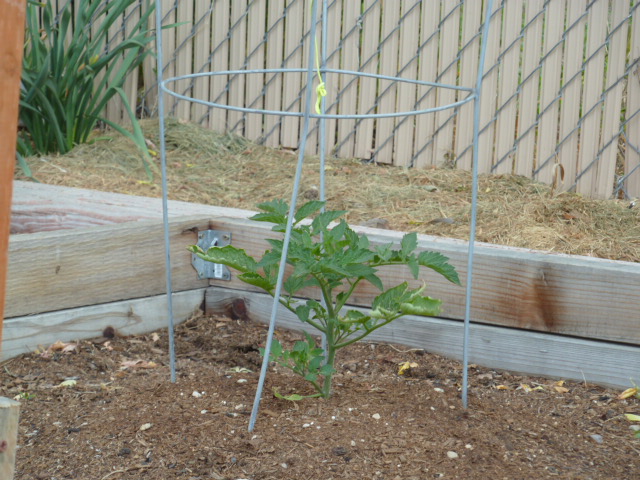
We humans like to have things on a schedule, I suppose it helps us believe we are in some sort of control. But deep down we all understand that nature controls everything in the garden. Sure we can mix up some 'booster fertilizer' recipe that has been handed down through generations to help get tomatoes ahead of everybody else, or just help our little dependent plants get off to a good start. But if the weather isn’t right ‘it ain’t gonna grow’.

It has taken two weeks for these plants to go from here. . . 

Tomato Juliet June 9

 
Tomato Cherokee Purple June 9


to here . . . 
Tomato Juliet June 20

Tomato Cherokee Purple June 20


These tomato plants have some BIG shoes to fill.
Tomato Juliet last year June 21
 I figure they are about a week to 10 days behind schedule but with the upcoming hot weather they'll get back on schedule in no time.


Read more...

The Garden, She Is A Seductive Mistress

>> Tuesday, June 21, 2011


Went out into the garden today.
My sole intention was to just sit, enjoy the sunshine, listen to the wildlife and read a book.
Before I realized what was happening, my gardener self had pulled weeds, spread mulch, deadheaded flowers, planted a squash, and was digging for bulbs that did not come up this year.


All in all I believe I feel just as contented as if I had sat down and read a book.

Read more...

Hydrangea Annabelle Finally Coming of Age

I first received this plant in May 2008. It was hard to believe that such a little slip of a plant had the potential of becoming such a beautiful large shrub.
Hydrangea Annabelle Hydrangea arborescens

It has taken three years to get its first blooms. Now, finally, the long awaited moment is upon us. Hydrangea Annabelle’s first blooms. Well, almost. Okay, maybe I'm pushing it just a bit. I feel like this photo is one of those scanner pictures that baby doctors take of expectant mothers. A baby in the womb sort of thing. But I just know its gonna be big, really big. These little buds can get up to 12" across. This thing is, what, maybe 1" across.
First bloom?

Anyway, this plant is pretty rare around Utah. At least to me it is. In all my travels throughout this state I have found but a handful. I was beginning to think it would be too much trouble to get it to grow here, much less get it to bloom.

The shrub is a remnant of a memory from my childhood. My grandmother had one of these proudly displayed in her front yard. I remember walking up the pathway to her front door and this thing just about covered the whole front porch. And the fragrance was heaven. This one is sitting right next to our back deck and I simply cannot wait to get a whiff of it when we are sitting out there eating supper or just relaxing.

I've actually tried growing two other hydrangea at this house and neither made it past the first winter. I'm either getting better at prepping the planting hole or my luck is simply changing. Either way I was ecstatic when  I saw these blooms forming.

Any day now I'm going to look over the deck railing and see this starring back at me:

This photo comes from www.hydrangeashydrangeas.com


Read more...

© 2007 -2011 - Utah Valley Gardens - All photos and content copyrighted by Utah Valley Gardens unless otherwise attributed. The use of photographs posted on this site without permission is forbidden and is protected by copyright law, as is all original text.

Blogger templates made by AllBlogTools.com

Back to TOP