Organic Weed Control: How Effective Is It?
>> Friday, February 11, 2011
Read more...
Sit a spell among natures beauty and share your experiences, both good and bad.
Gardening is meant to be shared and we would love to hear of your challenges and how you turned them into success. if you have any questions or suggestions please feel free to comment.
USDA Plant Hardiness Zone 6b
(-5 to 0 degrees F)
Average Last Spring Frost:
May 24
Average First Fall Frost:
September 24
Average Precipitation/Year:
18 inches
"Love of nature and appreciation of the beauties of the landscape were foreign to the rural population. The inhabitants of the cities brought them to the countryside."
Ludwig von Mises
Here’s something interesting I want to pass along concerning vinegar as a weed killer. Vinegar can kill weeds but it’s not the same vinegar that you find in your kitchen. Kitchen vinegar is 5% acetic acid. To be effective against weeds, vinegar must be distilled to 10 to 20 % acetic acid. Such concentrated vinegar exists as commercial food-prep product—such as that used by pickle manufacturers. However it isn't labeled/bottled for home cooks and it isn't labeled as an herbicide.
There are a few gardening products using "horticultural vinegar" that are labeled for home use as an herbicide, but they aren't available everywhere (they must be registered state by state).
If you look for a vinegar-based herbicide at the garden center, make sure it is registered with the EPA, and follow the instructions carefully. Concentrated acetic acid can burn the skin and damage the eyes. Keep the area closed off until the spray has dried.
Finally, you may have heard that homemade concoctions using kitchen vinegar (5% acetic acid) do kill weeds. It's true to a short extent. 5% acetic acid can kill certain types of weeds when they are young. However it can also damage nearby plants, and it doesn't kill the roots, only the top growth. So perennial weeds will return.
As hard as it can be to accept, the most effective (and safest) weed control is hand pulling.
So, you can save your household vinegar for cleaning around the house and of course for cooking recipes. It seems pulling weeds by hand is still the safest way to go.
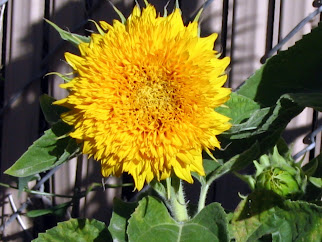
Isn’t this a beauty? This is what is known as a devil with an angels face. Why am I so disparaging of such a beautiful plant that brings forth visions of bright, happy, sunny times? Because its seed husks will kill any plant that tries to grow around it. It’s one of the ninja-like assassins of the plant world.
I had heard rumors about how nothing will grow under my bird feeders that are filled daily with black-oil sunflower seeds but I ignored these rumors because I wanted to keep birds coming into my yard. Hanna, at This Garden is Illegal, even presented a very compelling argument as to how these bully’s-in-disguise will try to take over. Well, after four years of feeding every bird that would land here, mainly finches and doves, I now have absolute proof.Here is one of the feeders I have placed in three locations around my yard. This one is under an apple tree.
And here is what the ground underneath looks like after four years. I don’t bother removing any of the debris except for what the lawn mower sucks up as it passes and as you can see, nothing is growing.
Last Fall, when I still scoffed at the idea of a secret society of plant kingdom hit squads, I placed three very young Weigela My Monet under the dogwood tree in my front yard (directly under one of the now infamous plant-killing sunflower-seed-filled birdfeeders). They didn’t make it. My stubbornness caused the death of three defenseless shrubs and, trust me when I say, I am remorseful. Am I a believer now? You betcha. My only hope now is that these ne’er do wells never get organized.
I decided to research this fascinating world of cutthroat techniques to survive in the plant world and I found this list of unsociable plants:
Sugar Maple
Hackberry
Eucalyptus
Black Walnut
Juniper
Sycamore
Oaks
Sassafras
Balsam Poplar
Manzanita
Granted, some of these plants are a bit exotic to most gardeners yards which is why it seems so odd that sunflower would be counted among this dastardly bunch.
I also learned that some people are considering allelopathy, (the inhibition of growth of a plant due to biomolecules released by another), as a nonchemical alternative to weed control. What they found was that some plant-made chemicals are a more potent photosynthetic inhibitor than the majority of synthetic herbicides. They are even talking about using native species and decorative ornamentals to be placed in strategic locations to eliminate the backbreaking job of weeding without resorting to chemicals. Now, this I could go for.
In the meantime, I will not stop feeding birds what they love most because I enjoy hearing the birds singing and squawking just outside my window. I probably won’t stop growing sunflowers because, well, you know, they are beautiful. I just need to get my timing down so I can enjoy them as long as possible before cutting off their heads. Gardening can be so cruel.
With so many wonderful blogs I enjoy I could not possibly list them all here. Please check them out here.
© 2007 -2011 - Utah Valley Gardens - All photos and content copyrighted by Utah Valley Gardens unless otherwise attributed. The use of photographs posted on this site without permission is forbidden and is protected by copyright law, as is all original text.
Blogger templates made by
AllBlogTools.com
Back to TOP